Surf Retreats
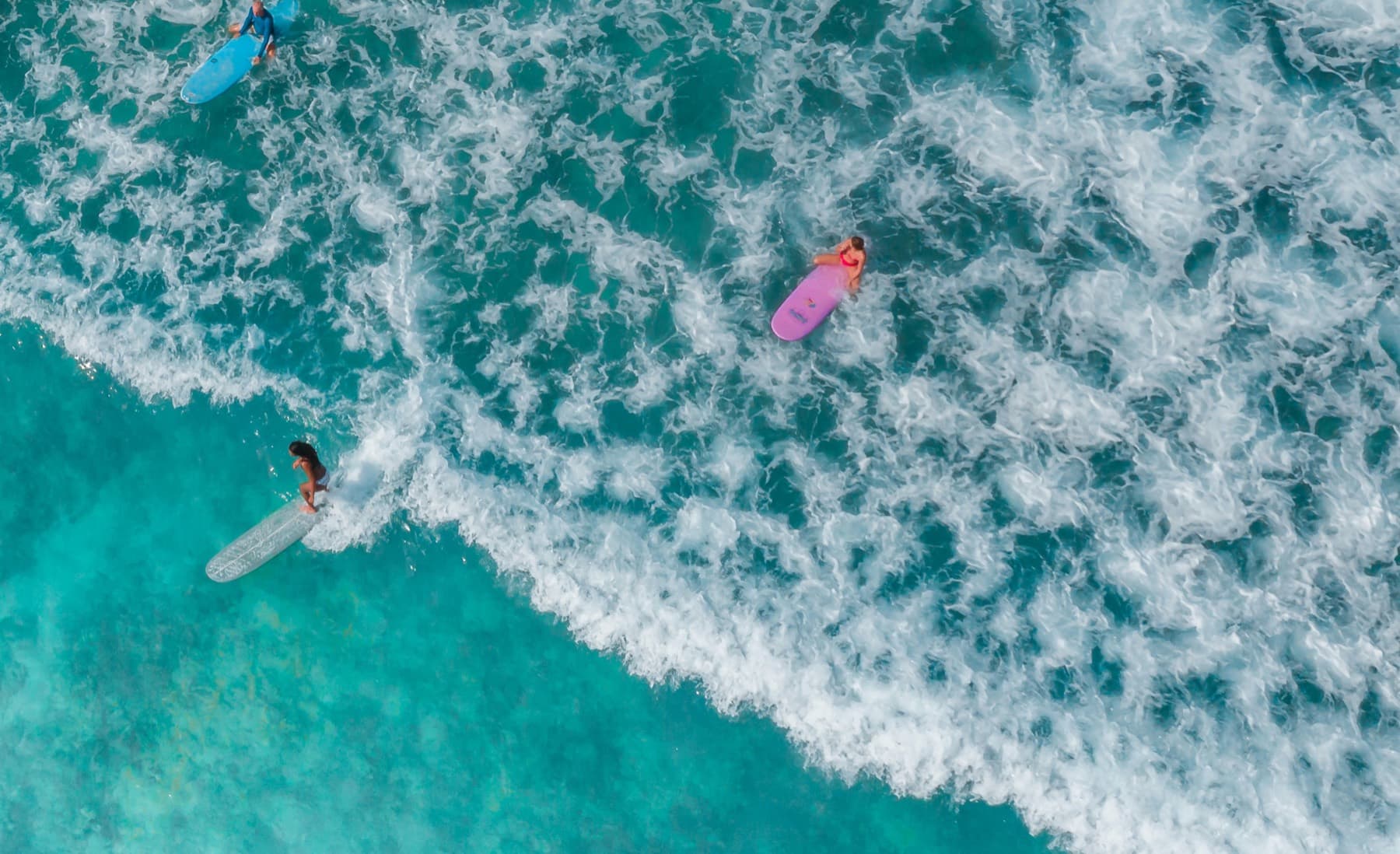
Surfers paddling out at a warm, sunlit Bali break
Indonesia
The surfer's island

Surf Retreats in Bali

Water temp
🌊27–29°C
Best months
📅Apr – Oct
Visa
🛂30 days free
Currency
💰IDR (Rupiah)

Patient coaches, warm water, and waves I could actually learn on — but it was the yoga, the food, and the rice terraces after a morning session that made it feel like more than a surf trip.

J
JessImprover · August 2025
Browse Bali retreats

The overview

Why surfers keep coming back to Bali

Warm water, consistent swells, and a culture built around the ocean. Bali has been drawing surfers for decades — from beginners catching their first whitewater in Kuta to experienced riders charging the reefs of Uluwatu. Add world-class yoga, affordable living, and sunsets that stop you mid-sentence, and it's easy to see why most people extend their stay.

Bali is where surf retreats and wellness culture genuinely overlap. The island has built its reputation around the combination — morning surf sessions, afternoon yoga, food that's worth talking about, and the kind of lush, spiritual setting that makes a week feel restorative in a way that goes beyond the surfing itself.

The waves help. Bali's southern coastline serves up a wide spread of breaks across every level, from gentle rolling whitewater for your first day to faster reef breaks that'll challenge anyone. Water temperatures hover around 27–29°C year-round, which means boardshorts, bikinis, and one less thing to think about. Most retreats run small groups with qualified coaches who pick the spot to match the conditions and your ability — so you're always surfing waves that make sense for where you're at.

What sets Bali apart from other surf retreat destinations is everything that happens around the surfing. The yoga here rivals dedicated yoga retreats — not an afterthought bolted onto a surf schedule, but a genuine part of the retreat culture. The food scene across Canggu, Uluwatu, and Seminyak ranges from local warungs to some of the best health-conscious restaurants in Southeast Asia. And the cultural layer — temples, rice paddies, ceremony — gives the trip a texture that pure surf destinations can't match.

Whether you're booking your first surf retreat or your fourth, Bali delivers a complete experience.

The waves help.

Where to stay

Bali's surf zones

Four distinct pockets of the island, each with its own rhythm. Pick the one that matches your surf level and the vibe you're after.

Canggu
Zone 1 / 412+ retreats

Bali

Canggu

The social hub — surf in the morning, smoothie bowls by midday, yoga at sunset.

Canggu is where most first-time Bali surf retreat guests end up, and for good reason. The beaches here — Batu Bolong, Echo Beach, Berawa — offer a genuine range from mellow learn-to-surf conditions through to punchy beach breaks that'll push intermediates. The town itself is walkable, well-stocked with cafés and co-working spaces, and has the island's best concentration of yoga studios and health-focused restaurants. The trade-off is crowds. Canggu is popular and the main breaks get busy, especially in dry season. But the energy is infectious — this is Bali's social heartbeat.

Surf spots

Batu BolongEcho BeachBerawaOld Man'sPererenan

3 beginner-friendly spots, 4 intermediate, 1 advanced

Food & lifestyle

Canggu's café scene is exceptional — açaí bowls, fresh juices, Indonesian fusion, and a growing number of genuinely good restaurants. Nightlife exists (Finn's, Old Man's bar) but it's more sundowners than clubbing.

Best for

Beginners and social surfers who want the full Bali experience outside the water.

I came for the surf and stayed for the smoothie bowls. Canggu is the kind of place where you extend your trip.

M
Mark · Beginner

Find your zone

Which Bali zone fits you?

Four quick questions. We'll point you to the spot on the island we'd book for someone like you.

Question 1 of 40%

What's your surf level?

When to go

Bali by season

May – September

Dry Season

You want the most options and the most consistent waves

WeatherDry, sunny, 27–30°C
Water temp27–28°C / 80–82°F
Retreats running25+
Average price3/4

What that means

Boardshorts and bikinis. No wetsuit, ever.

Wave conditions

Consistent S/SW swells, offshore mornings on the Bukit. Wide variety of breaks working.

Best for

All levels — most choice, most retreats running

Crowds

Busy — peak season for surf and tourism

Best time to surf

When to go

Dry seasonShoulder seasonWet season
2/5 · Wet
2/5 · Wet
3/5 · Shoulder
4/5 · Shoulder
5/5 · Dry
5/5 · Dry
5/5 · Dry
5/5 · Dry
4/5 · Dry
4/5 · Shoulder
3/5 · Shoulder
2/5 · Wet

Jan

Feb

Mar

Apr

May

Jun

Jul

Aug

Sep

Oct

Nov

Dec

Peak swell — Apr to Oct

Dry season is the classic Bali window

Offshore winds, consistent Indian-Ocean groundswells, and clear skies. Every break fires on its day. Peak season means more crowds at the popular spots — but the quality of the surf is unmatched.

Quieter — Nov to Mar

Wet season is softer, cheaper, and still very surfable

Afternoon rain and onshores, but smaller mushier waves suit beginners. Fewer crowds, lower prices — and the east coast lights up with swells the west coast misses.

A day in the life

What a day looks like in Bali

A composite day drawn from the retreats we've visited — specifics vary, but this is roughly the shape of it.

  1. 6:30am01

    Wake up

    Wake up to roosters and morning light hitting the rice paddies. Coffee on the terrace before anyone's properly awake.

  2. 7:30am02

    Surf session one

    Your coach drives the group to the break that suits today's conditions — maybe Batu Bolong for a mellow start, maybe Berawa if the tide's right. Two hours in the water, broken up with tips on the beach between sets.

  3. 10:00am03

    Breakfast

    Back at the retreat. Shower off, big breakfast — fresh fruit, eggs, Balinese coffee. You're hungrier than you expected.

  4. 11:30am04

    Free time

    Some people nap. Some grab a scooter and find a café. Some book a massage. The smart ones stretch.

  5. 1:00pm05

    Lunch

    Nasi goreng at a warung down the road, or the retreat's own kitchen if it's that kind of place.

  6. 2:30pm06

    Second session

    Either more surfing (if your arms can handle it), a theory session with video review of your morning waves, or a trip to a nearby break to watch and learn.

  7. 4:30pm07

    Yoga

    An hour of slow stretching and breathing that you didn't think you needed until your shoulders thank you for it.

  8. 6:00pm08

    Sunset

    Somewhere with a view — a clifftop bar if you're on the Bukit, the beach if you're in Canggu. This is the hour Bali is famous for.

  9. 7:30pm09

    Dinner together

    The kind of meal that turns a group of strangers into friends — grilled fish, cold Bintangs, stories from the day's waves.

Surf spots

Where to paddle out

01

Kuta Beach

Beginner
Beach break

The original Bali surf spot. Soft, forgiving waves on a sandy bottom — perfect for learning. Boards for rent everywhere, and instructors line the beach. It gets crowded, but there's plenty of wave to go around.

02

Batu Bolong, Canggu

All levels
Beach break

Canggu's most popular peak. A mellow right-hander that works on all tides, with enough push to keep intermediates happy and enough shoulder for beginners to practise. Cafés and board shops within walking distance.

03

Uluwatu

Advanced
Reef break

Bali's most iconic wave. A long, barrelling left that peels along a shallow reef below dramatic limestone cliffs. Paddle out through the cave entrance. Not for beginners — sharp reef, strong currents, and a heavy takeoff.

04

Padang Padang

Intermediate
Reef break

A short but punchy left-hander tucked below a narrow cave entrance. On smaller days it's a fun intermediate wave; when a solid swell hits, it transforms into one of Indonesia's heaviest barrels.

05

Medewi

Intermediate
Point break

A long, peeling left point break on Bali's quieter west coast. Slower and more forgiving than the south coast reefs. The rides are long, the crowds are thin, and the pace of life is a world away from Canggu.

Before you go

Bali trip essentials

The practical stuff we wish someone had told us the first time.

01

Flights

Bali is well-connected internationally

Bali's Ngurah Rai International Airport (DPS) has direct flights from Australia (6 hours). From the UK, expect 15–17 hours with one stop (Singapore, KL, or Dubai). From the US west coast, 17–20 hours with a connection. Return flights from the UK typically range £450–£700; from the US, $600–$1,100.

02

Getting around

Rent a scooter — it's the only way

Most retreat operators offer airport pickup — check when you book. A scooter costs 70,000–100,000 IDR/day (roughly £4–6 / $5–7). If not comfortable on two wheels, Grab (Bali's Uber equivalent) is cheap and reliable. Getting between zones takes 45–60 minutes by scooter or car.

03

Visa & entry

30 days visa-free, extendable to 60

Most nationalities get 30 days on arrival for free. If you want to stay longer, apply for a Visa on Arrival (VOA, $35) at the airport — it's extendable once for another 30 days at a local immigration office.

04

Budget

Bali is affordable once you're there

A good meal at a local warung costs 30,000–50,000 IDR (£2–3). A sit-down meal at a Canggu café, 80,000–150,000 IDR (£5–9). A one-hour Balinese massage, 100,000–200,000 IDR (£6–12). A day's scooter hire, 70,000–100,000 IDR. Budget around £15–25 / $20–30 per day for meals, transport, and extras.

05

Health & safety

Reef booties and sunscreen are non-negotiable

The reef is sharp and shallow at many breaks. Reef booties save your feet. Use reef-safe sunscreen (mineral, not chemical) — you'll be in the water for hours. Drink bottled water and eat at busy warungs.

06

Solo travellers

One of the easiest places to travel solo

Bali is one of the easiest places in the world to travel solo — and surf retreats make it even easier, because you arrive to a built-in group. Canggu in particular is full of solo travellers and digital nomads. Safety for solo female travellers is generally good — normal precautions apply, especially with scooters at night.

07

Connectivity

Good wifi and cheap SIM cards

Most cafés and retreats have reliable wifi. Grab a local SIM card at the airport (Telkomsel is the best network) for around 100,000 IDR ($6) with plenty of data. Canggu has strong digital nomad infrastructure — co-working spaces are everywhere.

08

Surf etiquette

Respect the lineup

Bali's popular breaks get crowded. Wait your turn, don't drop in, and paddle wide around the break — not through it. At reef breaks, the local surfers have priority. A smile and some patience go a long way.

Everything else

Common questions about Bali

Can't find what you're looking for? Ask our AI retreat matcher — it knows every listing on the site.

Absolutely. Bali has more beginner-friendly surf spots than almost any other retreat destination — sandy-bottom beach breaks with warm, shallow water. Most retreats include coaching tailored to first-timers, and instructors choose the spot to match your level each day.